Vocational Training 2026: Boost Employability by 22%
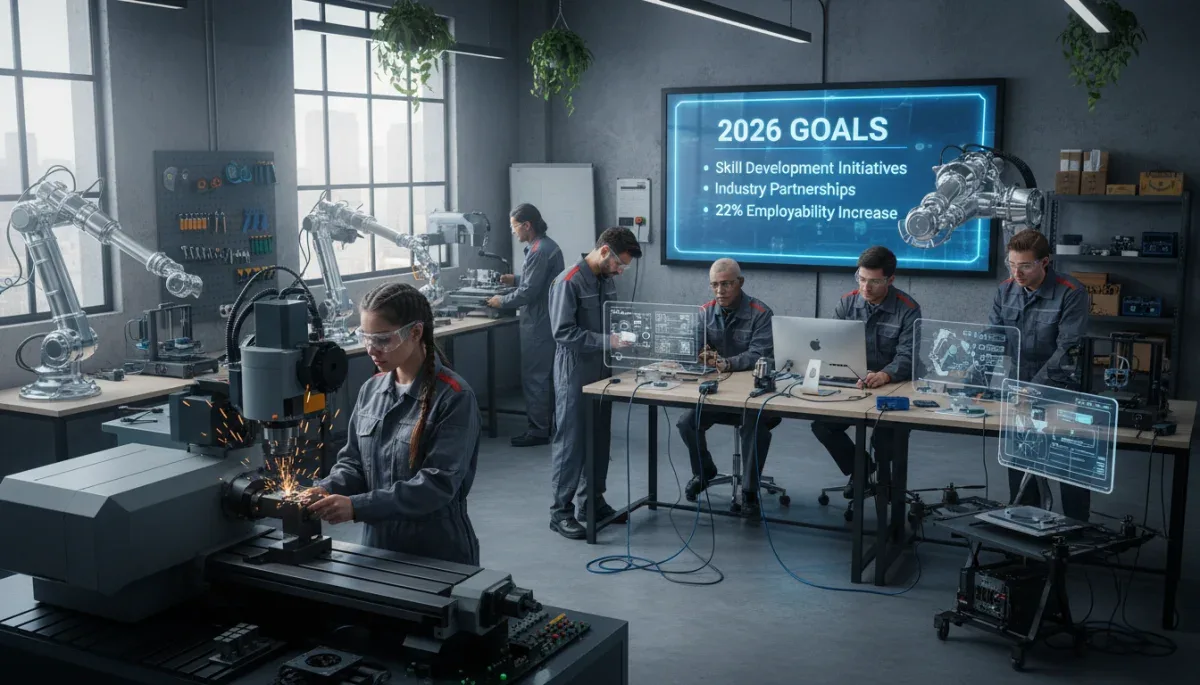
The 2026 shift in vocational training is set to revolutionize student outcomes by implementing four evidence-based methods, projected to increase employability rates by a significant 22%.
The landscape of education is constantly evolving, and vocational training is at the forefront of this transformation. By 2026, a significant shift is anticipated, promising to enhance student employability rates by an impressive 22%. This article delves into the four core, evidence-based methods that will drive this change, ensuring graduates are not just qualified, but truly job-ready for the demands of tomorrow's workforce. Understanding these strategies is crucial for educators, policymakers, and students alike, as we navigate the future of skill development and career pathways. The focus on vocational training employability is paramount for economic growth and individual success.
Understanding the Evolving Job Market and Skill Gap
The global economy is undergoing rapid transformations, driven by technological advancements, automation, and shifting consumer demands. This dynamic environment has created a persistent and growing skill gap, where the skills possessed by job seekers do not always align with the needs of employers. Traditional educational models often struggle to keep pace with these changes, leading to a disconnect between academic preparation and real-world job requirements. Vocational training programs, by their very nature, are uniquely positioned to bridge this gap, offering practical, hands-on experience tailored to specific industry needs.
Employers today are increasingly prioritizing candidates who possess not only technical proficiency but also a range of soft skills, such as problem-solving, critical thinking, adaptability, and communication. These competencies are essential for navigating complex work environments and collaborating effectively within diverse teams. The 2026 shift in vocational training acknowledges this comprehensive skill requirement, moving beyond purely technical instruction to foster a more holistic development approach.
The Impact of Digital Transformation
- Automation in manufacturing and service sectors.
- Rise of data analytics and artificial intelligence.
- Increased demand for digital literacy across all industries.
- Emergence of new job roles requiring specialized tech skills.
The digital transformation profoundly impacts the types of skills demanded in the workforce. Industries are integrating advanced technologies at an unprecedented rate, necessitating a workforce capable of operating, maintaining, and innovating within these new paradigms. Vocational training must therefore embed digital literacy and specialized tech skills into its core curriculum to ensure graduates are prepared for this future.
Furthermore, the gig economy and remote work trends are reshaping employment structures, requiring individuals to be more self-reliant, adaptable, and proficient in virtual collaboration tools. Vocational programs that incorporate these elements will better equip students for diverse career paths and working arrangements. The continuous evolution of job roles means that lifelong learning and upskilling will become even more critical for sustained employability.
In conclusion, recognizing the evolving job market and the widening skill gap is the foundational step in reimagining vocational training. By understanding these external pressures, educational institutions can proactively design programs that are responsive, relevant, and effective in preparing students for successful careers in the modern world. The goal is to create a workforce that is not only skilled but also resilient and adaptable.
Method 1: Industry-Integrated Curriculum Development
One of the most powerful methods to boost vocational training employability is through deeply integrating industry needs into curriculum development. This approach moves away from theoretical, standardized curricula towards dynamic, employer-driven programs. It ensures that what is taught in the classroom directly translates to the skills required in the workplace, making graduates immediately valuable to prospective employers.
This integration involves ongoing collaboration between educational institutions and industry leaders. Regular consultations, advisory boards, and direct partnerships allow for real-time feedback on emerging skill requirements and technological advancements. This proactive approach prevents curricula from becoming outdated and ensures that students are learning the most relevant and in-demand skills.
Strategies for Effective Industry Integration
- Establishing employer advisory councils for curriculum review.
- Implementing co-designed courses with industry experts.
- Facilitating regular internships and apprenticeships.
- Incorporating industry-standard tools and technologies.
Effective industry integration goes beyond mere suggestions; it involves a shared responsibility in shaping the educational experience. When companies are actively involved in designing modules or even delivering parts of the training, the relevance and practical applicability of the learning increase exponentially. This also provides students with invaluable networking opportunities and insights into corporate culture, easing their transition from academia to employment.
Moreover, this method fosters a culture of continuous improvement within vocational institutions. As industries evolve, so too must the training programs. This iterative process of feedback and adjustment ensures that vocational training remains a cutting-edge pathway to employment, consistently producing highly skilled and adaptable professionals. The goal is to create a seamless pipeline from education to employment.
Ultimately, an industry-integrated curriculum is not just about teaching skills; it's about cultivating a deep understanding of industry expectations and professional standards. This method ensures that vocational graduates are not merely qualified on paper but possess the practical expertise and professional acumen that employers actively seek, directly contributing to higher employability rates.
Method 2: Enhanced Experiential Learning and Apprenticeships
Experiential learning, particularly through robust apprenticeship programs, stands as a cornerstone of effective vocational training. This method emphasizes learning by doing, providing students with hands-on experience in real-world work settings. Unlike traditional classroom instruction, apprenticeships immerse learners in the daily operations of a business, allowing them to apply theoretical knowledge to practical challenges under the guidance of experienced professionals.
The benefits of apprenticeships extend far beyond skill acquisition. They foster a deeper understanding of industry practices, workplace ethics, and professional communication. Students develop critical problem-solving abilities and learn to navigate complex work environments, all while building a professional network that can be invaluable for their future careers. This direct exposure significantly reduces the learning curve typically associated with new hires.
Key Components of Successful Apprenticeships
- Structured on-the-job training with clear learning objectives.
- Mentorship by skilled professionals.
- Integration of classroom instruction with practical application.
- Formal certification upon completion.
Successful apprenticeships are characterized by a well-defined structure that balances practical work with theoretical instruction. Mentors play a crucial role, providing personalized guidance and feedback, helping apprentices develop both technical and soft skills. This blend ensures that apprentices gain comprehensive expertise, making them highly desirable candidates in the job market.
Furthermore, expanding access to high-quality apprenticeships requires strong partnerships between vocational schools, government bodies, and private enterprises. Incentives for companies to host apprentices, alongside streamlined administrative processes, can encourage broader participation and create more opportunities for students. The investment in these programs yields significant returns in terms of a skilled workforce and reduced recruitment costs for businesses.

The emphasis on experiential learning, especially through apprenticeships, directly addresses the employer demand for practical experience. Graduates who have completed such programs often require less onboarding and ramp-up time, making them more productive from day one. This practical readiness is a major factor in boosting their employability and overall career success. This method ensures students are not just learning about a job, but learning by doing the job.
Method 3: Personalized Learning Paths and Adaptive Technologies
The third evidence-based method focuses on leveraging personalized learning paths and adaptive technologies to cater to individual student needs and learning styles. Not all students learn at the same pace or in the same way, and a one-size-fits-all approach can hinder effective skill acquisition. Personalized learning recognizes these differences, allowing students to progress through material at their own speed and focus on areas where they need the most support.
Adaptive technologies, such as AI-powered learning platforms and virtual reality (VR) simulations, play a pivotal role in enabling personalized learning. These tools can identify a student's strengths and weaknesses, tailor content to their specific needs, and provide immediate feedback. This targeted approach ensures that every student receives the instruction and practice necessary to master complex skills, optimizing their learning journey.
Benefits of Adaptive Learning in Vocational Training
- Improved engagement and motivation.
- Targeted skill development based on individual needs.
- Faster skill acquisition and mastery.
- Preparation for diverse industry scenarios through simulations.
For example, in a welding program, an adaptive VR simulation could allow a student to practice different welding techniques repeatedly until mastery is achieved, without the cost or risk associated with physical materials. The system could then identify areas where the student struggles and provide additional targeted exercises or instructional content. This iterative and personalized feedback loop accelerates learning and builds confidence.
Moreover, personalized learning paths can incorporate micro-credentials and modular learning, allowing students to earn certifications for specific skills as they acquire them. This flexible approach is particularly beneficial for adult learners or those seeking to upskill quickly for specific job roles. It makes vocational training more accessible and responsive to the evolving demands of the job market, enhancing the overall vocational training employability.
By embracing personalized learning and adaptive technologies, vocational institutions can create more effective and engaging learning environments. This method ensures that each student receives the optimal support to develop in-demand skills, leading to higher completion rates and, crucially, significantly improved employability outcomes in a competitive job market.
Method 4: Soft Skills Development and Career Navigation Support
While technical skills are undeniably important, the modern workforce places an equally high value on soft skills. Therefore, the fourth crucial method for boosting vocational training employability involves dedicated programs for developing communication, teamwork, problem-solving, and critical thinking abilities, alongside comprehensive career navigation support. Employers consistently report that a lack of soft skills is a major barrier to entry and advancement, even for technically proficient candidates.
Integrating soft skills development throughout the curriculum, rather than as an afterthought, ensures that students understand their importance and have ample opportunities to practice them. This can be achieved through group projects, presentations, role-playing scenarios, and structured feedback sessions. The goal is to cultivate well-rounded professionals who can not only perform technical tasks but also interact effectively within a professional environment.
Essential Soft Skills for Modern Employability
- Effective oral and written communication.
- Collaboration and teamwork.
- Adaptability and resilience.
- Critical thinking and problem-solving.
- Time management and organization.
Beyond skill development, robust career navigation support is essential. This includes career counseling, resume building workshops, interview preparation, and job placement assistance. Vocational institutions should act as active bridges between their graduates and potential employers, facilitating introductions and ensuring students are well-prepared for the hiring process. This support extends to teaching students how to market their skills effectively and understand employer expectations.
Mentorship programs, connecting students with industry professionals, can also provide invaluable insights into career pathways and professional development. These relationships offer guidance, encouragement, and real-world perspectives that go beyond formal instruction. Such support systems help students not only secure their first job but also plan for long-term career growth.

By consciously integrating soft skills training and offering comprehensive career support, vocational programs can significantly enhance a student's readiness for the workforce. This holistic approach ensures that graduates are not just technically competent but also possess the interpersonal and professional skills necessary to thrive, ultimately leading to a substantial increase in their overall employability rates and long-term career success.
Measuring Success: Metrics and Continuous Improvement
To ensure the effectiveness of these four evidence-based methods, it is crucial for vocational training institutions to establish robust systems for measuring success and fostering continuous improvement. Without clear metrics, it is impossible to determine whether the implemented changes are achieving the desired outcome of boosting student employability rates. This involves a data-driven approach to program evaluation and adjustment.
Key performance indicators (KPIs) should be identified and tracked consistently. These might include graduation rates, job placement rates within specific timeframes, average starting salaries, employer satisfaction surveys, and student feedback. Longitudinal studies tracking graduates' career progression can also provide valuable insights into the long-term impact of the training programs. This comprehensive data collection allows institutions to pinpoint areas of strength and weakness.
Key Metrics for Vocational Program Evaluation
- Post-graduation employment rate (e.g., within 6 months).
- Alignment of graduate skills with employer needs.
- Average wage growth of alumni over time.
- Student satisfaction with career services.
- Industry partner engagement and feedback.
The data collected from these metrics should not merely be reported; it must be actively used to inform program adjustments. If, for example, employer surveys indicate a consistent gap in a particular skill, the curriculum should be reviewed and modified to address that deficiency. This iterative process of measurement, analysis, and adaptation is fundamental to maintaining the relevance and effectiveness of vocational training programs.
Furthermore, fostering a culture of continuous improvement involves regular professional development for instructors, ensuring they are up-to-date with industry trends and pedagogical best practices. Engaging alumni in feedback loops can also provide valuable perspectives on how the training prepared them for their careers and what areas could be strengthened for future cohorts.
Ultimately, a commitment to rigorous measurement and continuous improvement ensures that vocational training remains dynamic, responsive, and maximally effective in preparing students for successful careers. This data-driven approach is vital for achieving and sustaining the ambitious goal of increasing employability rates by 22% by 2026, solidifying the value proposition of vocational education.
Overcoming Challenges and Ensuring Equity in Access
Implementing these transformative methods in vocational training is not without its challenges. Resource constraints, resistance to change, and the need for ongoing faculty development are significant hurdles. However, addressing these challenges is crucial for successful implementation and for ensuring that the benefits of enhanced employability are accessible to all students, regardless of their background or socioeconomic status.
One major challenge is securing adequate funding for new technologies, updated facilities, and highly skilled instructors. Government support, industry partnerships, and philanthropic contributions are all vital in overcoming financial barriers. Creative funding models, such as shared equipment programs with local businesses, can also help stretch resources and provide students with access to state-of-the-art tools.
Addressing Challenges and Promoting Equity
- Securing diverse funding streams for program development.
- Investing in continuous professional development for instructors.
- Developing inclusive recruitment strategies for diverse student populations.
- Providing support services for disadvantaged students (e.g., childcare, transportation).
Resistance to change, both from within educational institutions and from traditional industry partners, can also impede progress. Clear communication about the benefits of new approaches, coupled with success stories and pilot programs, can help build consensus and enthusiasm for innovation. Demonstrating the positive impact on student outcomes and employer satisfaction is key to gaining buy-in.
Ensuring equity in access is paramount. Vocational training must be available to a diverse student body, including individuals from underserved communities, those with disabilities, and adult learners seeking career changes. This requires targeted outreach, flexible program schedules, and comprehensive support services, such as academic advising, financial aid, and mentorship programs, to remove barriers to participation and success.
By proactively addressing these challenges and prioritizing equity, vocational training institutions can create a more inclusive and effective educational ecosystem. This commitment ensures that the 2026 shift not only boosts overall employability rates but also contributes to a more equitable and skilled workforce, benefiting individuals and the broader society alike. It is a collective responsibility to make vocational education a pathway for everyone.
| Key Method | Impact on Employability |
|---|---|
| Industry-Integrated Curriculum | Ensures skills taught directly match employer demands, making graduates job-ready. |
| Experiential Learning & Apprenticeships | Provides practical, hands-on experience and professional networking opportunities. |
| Personalized Learning & Adaptive Tech | Tailors education to individual needs, accelerating skill mastery and engagement. |
| Soft Skills & Career Support | Develops crucial interpersonal skills and guides students through job placement. |
Frequently Asked Questions about Vocational Training Employability
What is the main goal of the 2026 shift in vocational training?▼The primary goal is to significantly boost student employability rates by 22% through the implementation of four evidence-based methods. This ensures graduates possess skills directly aligned with evolving industry demands and are well-prepared for the modern workforce.
How does industry-integrated curriculum development enhance employability?▼By involving industry leaders in curriculum design, vocational programs ensure that the skills taught are directly relevant and in-demand by employers. This reduces the gap between academic learning and workplace requirements, making graduates more valuable immediately.
What role do apprenticeships play in boosting student outcomes?▼Apprenticeships provide invaluable hands-on experience, allowing students to apply theoretical knowledge in real work settings. This practical exposure, combined with mentorship, develops critical technical and soft skills, making graduates highly competitive in the job market.
Can personalized learning truly make a difference in vocational training?▼Yes, personalized learning paths and adaptive technologies cater to individual learning styles and paces. This tailored approach optimizes skill acquisition, addresses specific weaknesses, and keeps students engaged, leading to more effective and efficient mastery of vocational skills.
Why are soft skills considered essential for modern vocational graduates?▼Soft skills like communication, teamwork, and problem-solving are crucial for workplace success. Even with strong technical abilities, a lack of these interpersonal skills can hinder employment and career progression. Integrating them ensures well-rounded, adaptable professionals.
Conclusion
The 2026 shift in vocational training represents a pivotal moment for education and workforce development. By strategically implementing industry-integrated curriculum development, enhancing experiential learning and apprenticeships, adopting personalized learning paths with adaptive technologies, and prioritizing soft skills alongside comprehensive career navigation support, vocational institutions are poised to make a profound impact. These four evidence-based methods are not merely theoretical concepts but actionable strategies designed to bridge the skill gap and significantly boost student employability rates by 22%. This transformation will create a more skilled, adaptable, and resilient workforce, benefiting individuals, industries, and national economies alike. The future of vocational training is bright, promising a direct and effective pathway to career success for countless students.